
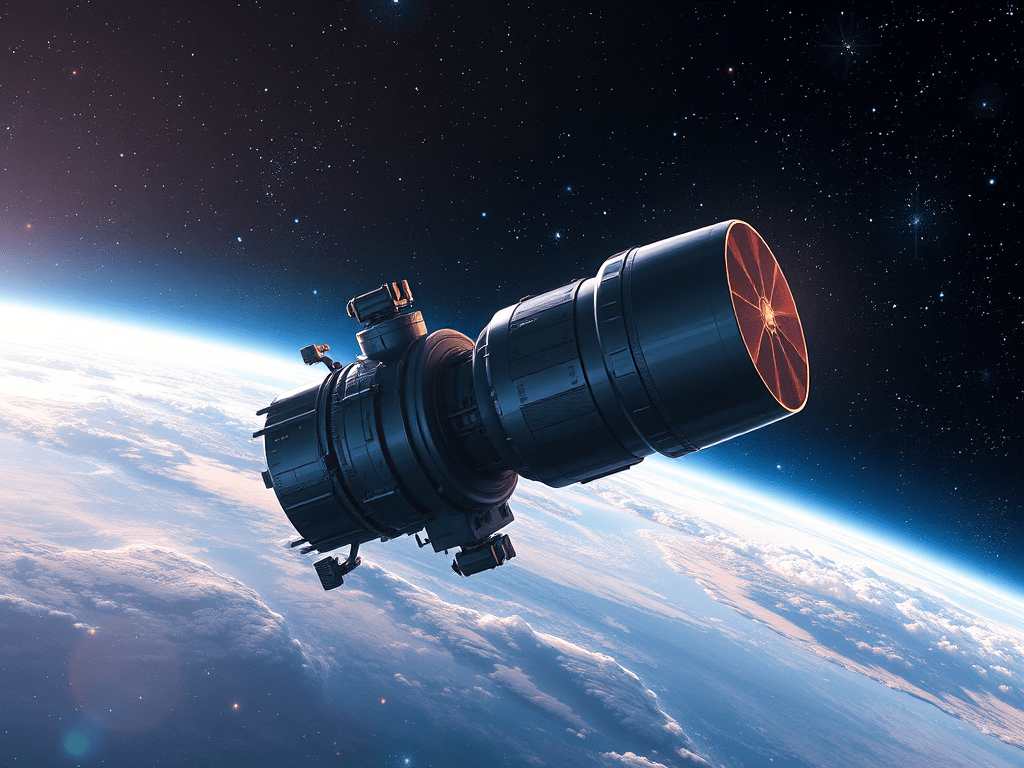
Today marks the 35th anniversary of the Hubble telescopes official launch.
The crew from the Discovery space shuttle, placed the Hubble telescope into low orbit around Earth. While it’s been 35 years since its launch, it has a much longer history. Hubble was conceived as a thought experiment in the 1940’s, but it wouldn’t be until the 1970’s that it would be developed. It would take another decade for humans to build it, beginning in the 1980’s.
Hubble orbits the Earth every ninety-seven minutes, but it was a long journey to the low orbit of Earth. The engineering feat was massive, weighing over 24,000 pounds and telescope contained mirrors that were almost 8 feet. The initial plan was to have this completed by 1983, but there were several technical setbacks and extended costs made NASA a political target. While the Hubble was actually fully completed years before its 1990 launch, it sat in storage after the 1986 Challenger explosion, which saw a grounding of the Space Shuttle Program.
Eventually, it would launch but this was only the beginning. After being launched, it began sending pictures back, with one massive problem, the pictures were horribly blurry. Scientists would ultimately determine that this was caused because the main mirror in the telescope was ground in the incorrect shape. The contractor, Perkin-Elmer Corporation had manufactured the mirror incorrectly, being the width of 1/50th of a human hair off from the target specifications. This tiny flaw made the one and a half billion dollar telescope worthless.
In 1993 NASA sent another rescue mission up to Hubble. The space shuttle Endeavour was launched in December 1993 with the aim of fixing the telescope, installing the COSTAR correction system and replacing several faulty instruments. The crew also performed five back to back space walks. The idea was to apply a corrective optics (essentially glasses) to the telescope, and it worked. Suddenly, the telescope could see over 10 billion light years away.
In short, the Hubble stands as a bastion to scientific research, ingenuity, and perseverance. Born from ambition, nearly dying due to several disasters, and survived long enough to potentially help rewrite human history.






 Creator1
Leave a reply to Herald Staff Cancel reply